The power of patterns

The brain is a pattern-mad supposing machine.

Diane Ackerman, NY Times

Recently, I’ve been thinking a lot about how brands actually work. What actually are they? And how to they actually make money? And how do we design and build them successfully?

I know, I know, an awful lot has been written about this. I’m not trying to come up with the answer myself here, I’m just trying to consume media that will help me gain a better understanding of these questions, and apply them to the brands that I work on. To make informed decisions and advise clients.

And, well, I’ve gone down a bit of a pattern matching rabbit hole. Care to join me?

The history of human pattern matching

So, there’s no revelation in saying that pattern matching was life and death back when we were being hunted by sabre tooth tigers and other deadly prey. Our brains are belief engines: as we go around in the world spotting patterns we create narratives and beliefs around them. That swish of grass is the wind, and that swish of grass is an animal stalking us.

An example given by Ackerman is that being able to recognise a single lion, only helps you be prepared for that very same lion. Whereas pattern matching helps you prepare for other similar lions, and build a network of patterns that help you prepare for other predators.

We are the ancestors of those most successful at finding patterns.

Michael Shermer, Scientific American

And our ability to predict and understand patterns comes from our powerful imagination, which has the ability to fill in the banks: “Given just a little stimuli, it divines the probable. When information abounds, it recognizes familiar patterns and acts with conviction. If there’s not much for the senses to report, the brain imagines the rest.”

This incredible feature of the human brain meant that we could dry run or test the outcomes of likely scenarios without having to put ourselves in any danger. We simply imagine what might happen if we run off the edge of that cliff based on what we know about jumping, falling, what happens when there’s no earth beneath our feet, painful falls, what we’ve seen happen to other people who jump or fall, or other objects the go over the edge of that cliff, and so on. Without actually having to find out in real life.

And that’s what Ackerman meant when she said the brain is a “pattern-mad supposing machine”. Connect the dots, and fill in the “what ifs”.

As a note of caution, all of the studies I’ve read on this subject agree that this leads to us, well, jumping to conclusions. Shermer calls this patternicity – “the tendency to find meaningful patterns in meaningless noise”. Some authors talk of how this leads us to continue to gamble on a losing streak; some authors talk of how this leads us to believe conspiracy theories or miracles.

This feels a little contradictory – yes we’re amazing pattern matchers, but we often get it wrong. Shermer puts this juxtaposition down to the fact that from an evolutionary perspective, we only needed to see patterns that stopped us from dying. If we go back to wind in the grass example, if we saw several patterns of movement in the grass as predators, but a couple of them were actually just the wind – never mind, we still live. But if we saw one pattern movement in the grass as wind, that was actually a predator – game over. No learning experience here.

But if we didn’t let imagination fill in the blanks, we’d be unable to survive all the novel predicaments and landscapes we encounter.

Diane Ackerman, NY Times

So, we’ve evolved over thousands of years to be the very best of the best at spotting and understanding patterns. Most of the time.

How does pattern matching help us now?

The Ravenous Brain: How the New Science of Consciousness Explains Our Insatiable Search for Meaning by Cambridge neuroscientist Daniel Bor states that “our penchant for pattern-recognition is essential to consciousness and our entire experience of life”, and that “our capacity for pattern-recognition is the very source of human creativity”.

According to a study by Ohio State University, detecting patterns is a big part of how we make decisions, we detect patterns in our environment all the time to help make decisions quicker and easier. We combine our pattern searching with probabilistic learning – how likely something is to happen. “It isn’t just about predicting what is coming next. It is looking for rules to help predict better and faster“.

The bit that fascinates me is that if your brain expects something to happen, it makes that information (and other related information) quicker and easier to access.

The neocortex is not just recognizing the world. It is always attempting to predict what will happen next, moment by moment. If it expects something strongly enough, the recognition threshold may be so low that it fires even when the full pattern is not present.

Tiago Forte

John Kaufman, author of one of my favourite business books the Personal MBA, refers to pattern matching as “one of the foundational capabilities of our mind and how it works”. Kaufman says that we optimise our brains to search out and store new patterns, and the more patterns we can recall, the better problem solvers we are.

When we go into a supermarket, we’re confronted with roughly 40,000 items, and we can go in and buy a few of them in a few minutes.

Byron Sharp, Hacking the Unconscious episode six

This is pattern matching as a shortcut, a decision making tool. A way of interpreting the ever more complex world around us. It’s how we filter the useless from the useful.

How does understanding pattern matching help build successful brands?

Understanding how we interpret patterns in the world around us unlocks key information on how we use brands as decision making shortcuts.

Let’s jump to a bit of Binet just here. The relevant part of Binet’s How advertising works is the make brands easy to think of.

Les Binet

Pattern pleases us, rewards a mind seduced and yet exhausted by complexity. We crave pattern, and find it all around us, in petals, sand dunes, pine cones, contrails. Our buildings, our symphonies, our clothing, our societies — all declare patterns. Even our actions: habits, rules, codes of honor, sports, traditions — we have many names for patterns of conduct. They reassure us that life is orderly.

Diane Ackerman, NY Times

So, what does that mean for us in the world of building brands?

Our brains are in love with searching out patterns. We love it when our expectation of what’s about to happen… happens.

So for brand strategists, designers, managers, the conclusion is quite clear. Help consumers use brands as decision making shortcuts:

  • Set a clear expectation of what the brand is/stands for.
  • Create distinctive brand assets that communicate the brand.
  • Use them clearly, constantly and regularly.

As you’re going about your life over the next few days, have a think about what patterns you’re seeing; how that’s helping you filter; how that’s helping you make decisions. I’d be interested to hear your experiences and thoughts on the subject.

Also, if you’re in the world of branding and have consciously and successfully used pattern matching for a campaign or brand – I’d love to hear about that too!

Be brave. Feel stupid.

Strategy for beginners

Empathy marketing

Empathy marketing was always going to be a trend for 2020. The green shoots of this has been building for a few years, before I’d ever heard the words coronavirus or COVID-19. We had no idea what the new Roaring Twenties would bring us, and I’m sure very few would have expected a global pandemic leading to global lockdown. 

But here we are.

Do you remember when all you heard about was how entitled and self-obsessed millennials are? Well fortunately, over the past few years their image has done a total 360, and they are now viewed as much more collectivist than their individualist generational predecessors.

What was once seen as arrogance is now being viewed as an unwillingness to put up with that they see as wrong, unfair or unjust. One might call them principled. And not afraid to stand up for what they believe in.

This shift in perception, and a recognition that millennials now account for a third of the population, created a boom in brand purpose. A solid product and a “cool” brand was no longer enough. They needed to stand for something.

The phrase “experiences over possessions” is now a nearly cliched target audience insight, but it remains no less true, according to Experian, especially for the millennial population.

We’re in a landscape of increasing community values, we’ve all spent a year rallying behind Greta, we want to save the planet, mental health awareness is on the up and up. This all already paints a picture of a gentler, fairer society. And so naturally, brands must fall in line with this global cultural shift in order to stay relevant.

Marketing in 2020

So, enter stage left… 2020 and all that it has brought… so far.

After an initial total panic and meltdown, leading to mass stockpiling and shortages of essential items, supermarkets had to enforce limitations on how many packets of certain items people could buy.

This display of selfishness and chaos was like the start of every apocalypse movie, leading to a widespread fear that this may actually be the end of days.

However, as the days and weeks rolled on, we was mass displays of love, kindness, support and community spirit. From the rainbows in windows, and weekly clapping for the NHS, to companies, crafters and individuals creating PPE supplies.

Vast amounts of content being live streamed, from PE classes to bake alongs to huge broadway musical hits.

Grassroots hubs sprouted across the country offering supplies and help to those who needed it, well before the Government suggested creating such a network. People were shielding the most vulnerable well before the Government decreed it so.

To the small acts of checking in on neighbours, people routinely signing off emails “Stay safe” instead of the usual “Kind regards”.

And brands are responding. They are now “here for us”. They are playing up heritage, community, their efforts for the greater good. People over profits. People first. Bringing people together. 

But how sustainable is that? And how true and authentic is that? How are brands going to build on these messages for years to come? And are they going to be able to put their money where their mouth is.

My sense is that we’re in a place where brands are totally over promising, and going to spend the next few years backpedaling. But perhaps that’s just the cynic in me.

What I see is people waking up to the power of companies. For the force for good that they can be, should they wish to. We’ve seen companies, huge companies, pivot their business in a matter of days. We’ve seen overhauls of complex systems to allow working from home. We’ve seen companies do the impossible, and the improbable. 

I think we’ll see consumers voting with their money. Making a stand. And not falling for the company line when questioned.

During the past month (how has it only been a month?!) we’ve seen a huge amount of advice and guidance on how brand should be navigating these choppy (and what feels like shark infested) waters. From celebrating their worked for carrying on working (safely), to jumping on the NHS-cheering bandwagon, to pivoting manufacturing to keep up supplies, to the “we’re here for you” cliche, and many, many more. 

My counsel to brands is now is the time to stop and take stock.

Stand and stare

In 1911 a poet from near my hometown in Gloucestershire wrote a poem warning that the hectic pace fo modern life has a detrimental effect on the human spirit.

What is this life if, full of care,

We have no time to stand and stare.

No time to stand beneath the boughs

And stare as long as sheep or cows.

No time to see, when woods we pass,

Where squirrels hide their nuts in grass.

No time to see, in broad daylight,

Streams full of stars, like skies at night.

No time to turn at Beauty’s glance,

And watch her feet, how they can dance.

No time to wait till her mouth can

Enrich that smile her eyes began.

A poor life this if, full of care,

We have no time to stand and stare.

W.H. Davies

More than a hundred years later, we are yet to heed this warning. I’m sure we’ve all felt the world hurtling forward; a societal Moore’s Law.

And now, today, the world has had the brake well and truly put on. So let’s all take advantage of this fact.

The question that has been running through my mind is: Will we come out of this collective experience as a more gentle and empathetic society, or will we inevitably spring back to the individualistic society that has been in a boom and bust cycle for over a century?

I may have given away my feelings on the subject in the phrasing of the question, but I would love for that not to be the case.

Empathetic endeavours

This goes broader than marketing and deeper than brands. This is about the importance that we put on people and planet.

Making money is all good and well, but at what cost?

So how can we create this Brave New World?

  1. More brave leaders. If you’re looking to lead a group of people, a company, a team, a Cub Scout pack; read Brené Brown’s Dare to Lead. These are the people that we want in charge. Be one of them.
  2. More brave brand leaders. Brené’s book is aimed at people, but the learnings for brands come through loud and clear.
    1. Strong back. Soft front. Wild heart.
    2. Integrity is choosing courage over comfort.
    3. Clear is kind.
    4. Brené even provides a list of values.
  3. Vote with your wallet. Companies can’t make money if consumers won’t give it to them. Don’t agree with Dyson’s stance on Brexit? Pick a Shark next time. Feel sad about all the plastic in the ocean? Get your shampoo in a plastic free bar form from Lush. Don’t like the employee care standards in Amazon warehouses? You get my point.
  4. Vote with your heart. If you want to protect the NHS and save lives, get out on polling day and vote with your heart. You know what I’m saying.
  5. Be excellent to each other. We hear things like “How would you feel if that was your sister/mother/father/brother?” We don’t really need to have a familial connection to another person to empathise and do the right thing by them. We just need to practice. Let’s all just practice.

How are you counselling your clients to be brave and play in a more empathetic space? Do you think the world will spring back? Or do you think we’ll see a permanent shift towards kindness?

Be brave. Feel stupid.

Mischief managed

There’s a lot to be said for being just a little bit naughty, wouldn’t you say? To play at the edges of acceptability. To push people’s buttons and see what happens. Coming up with new ideas is about seeing just how much mischief you can get into, and then only when you’ve reached the edge, pulling back into slightly safer territory.

mischief
Naughty elf!

Lateral thinking – the thinking man’s thinking

In my last post Ideas are threats, I touched on lateral thinking, after Mark Pollard called it out as an advertising planner’s stock in trade. Lateral thinking is about producing a volume of creative and incongruous ideas, in order to get to the best possible solution to your problem.

“Brain training pioneer” Edward de Bono is more well know for his six hats (especially that pesky black hat). But he formed the idea of lateral thinking 50 years ago: possibility thinking.

Creativity is a skill that everyone can learn.

The BBC did a little segment on de Bono’s lateral thinking, which is a fascinating piece of audio.

Ok, but what is it for? Where do I start? How can I use it?

In its simplest terms, lateral thinking is a way of stretching the innovations your mind can come up with. You have a problem. You need a solution. The odds are, someone has tried to come up with a solution before, right? But you still need a solution. Which means either previous ones didn’t work, or they didn’t work well enough (too expensive, too slow, too complex, etc).

So you don’t just need any solution, you need the right solution. The best solution. Ok, so this is where lateral thinking comes into its own. People think of Sherlock Holmes (one of my heroes) as a man of logic and reason. And that he was. But he was also a great lateral thinking.

Elementary, my dear Watson!

According to my good friend Google, lateral thinking is the solving of problems by an indirect and creative approach, typically through viewing the problem in a new and unusual light.

View your problem through a new and unusual light

Unusual, you say? Ok, we can do that!

When you think of problem solving, you think you need only the right information. But lateral thinking can throw in loads of curveball information, to stretch your mind, to make it work harder for the problem. And therefore find different solutions to everyone who has tried to crack the problem before (I’m going to try and stop saying solution now).

Lateral thinking is concerned not with playing with the existing pieces but with seeking to change those very pieces.

So let’s take a look at a problem that lots of people face when searching for a job, and one that was raised recently in Mark Pollard’s strategy discussion group Sweatheads:

I’m job hunting at the moment. Does anyone have any ideas or pointers on what to include in an application?
Resume, cover letter and…? And any thoughts on what makes a great cover note?

Lateral thinking exercise

In other words, how do you get cut through when looking for a job? Here’s the process we’re going to follow to approach this (obviously this is going to be quite a generic outcome, but let’s see how we get on):

  1. What are our assumptions about getting a job?
  2. What are the normal routes to a job? 
  3. What if we couldn’t do any of these things?
  4. How can we reframe the question?
  5. Let’s work backwards.
  6. Change the perspective.

Once we’ve worked through these steps, hopefully we’ll have come up with a number of different routes to getting a job. Some will be awful, but we’re looking for that one little gem, the nugget of gold amongst the rocks.

What are our assumptions?

  • Everybody wants a job.
  • A company has a specific need for specific skills for a specific amount of time.
  • There is a person or group of people making the decision on the person they will hire for that role.
  • There will be other people, and possibly a lot of other people, wanting that role.
  • The better the job the more competition for the role.
  • It’s not what you know, it’s who you know – people with an “in” to the company will be able to queue jump.
  • It’s not all about the skills and experience, but about cultural fit.
  • Hiring managers are scared of making the wrong decision, so might go for the safe option, the person that ticks all the boxes.

Ok, that’s a good list for now. Doing this for real I could go on for much longer, but this should do to illustrate the point without boring you to death with lists.

What are the normal routes to a job? 

  • You see an advert for a role online (job board, industry publication, etc), send a CV or fill out an application form.
  • You someone in a company and ask them to put you in touch with HR, the hiring manager, or the person in the department who might be your boss.
  • You network  within the industry to hear about roles as they come up.
  • You reach out to your existing network to hear about roles.

What if you can’t do any of these?

This is where things get interesting. How do you get a job if you can do any of these things?

  • If you can’t reach out to them, get them to reach out to you. Become really well known for a particular skill or project. Self promotion.
  • What if you can’t use a computer, so you have to send in the application by post?
  • What if you’re really nervous and can’t speak to people at networking events? You could host an event and be behind the scenes, and hopefully build your confidence.
  • What if you were really expert and went to speak at events, rather than being a delegate?
  • What if you’re looking for a job in a new industry or country where you have no network or expertise? You could put together a portfolio of work with transferable skills. You could reach out to people you admire in the industry for mentorship, or guidance. You could start a blog on the topic you want to become an expert on to teach yourself about the subject and eventually showcase your expertise (hello wannabe strategist…)

How can we reframe the question?

So now you start questioning the question. Do you really need a job? What is a job? What defines the job you are looking for? What happens if you don’t get a job? What happens if you got a job in a different industry? How would this process be different if you were making a purchase? If you had to buy your job? How would you approach this differently if you needed to start the job tomorrow? Or in five years? 

The questions here are limitless. I just stream of consciousness writing to get a load of questions out, before you start answering them. 

Do you think you’re asking the right question? Or has the question changed based on this exercise?

Working backwards

You’re looking for a job. Presumably you’re looking for a specific job. Imagine you’re already in that job. And you’re smashing it. Really think about that situation. What does it look like? What does it feel like? Where are you? Who are you with? What are your colleagues like? What’s your boss like? How is your homelife different with this new job? What kind of money are you taking home? Where is your office? What do you have for lunch?

I’m not sure if you can tell but I’m a big believer in visualisation. This is a good step for getting clear on what you want, as well as for this lateral thinking exercise.

Now you’re clear on the end game, how did you get there? Work backwards.

  • What was your first day like?
  • How much time was there between finding out you got the job, and starting the job? What did you do in that time?
  • How did you find out you got the job? Who told you? Where were you? Who did you tell first?
  • What sealed the deal? What put you in front of the competition?
  • What was the interview process like? How many rounds? How many people?
  • What feedback did you get after your first interview? Who interviewed you? Where was it?
  • How did you find out about the job? How did you apply? How did you position your skills? 

I know this is easier said than done, but it’s such a useful exercise. And there’s no right or wrong answer, so chill out and give it a go. There’s an infinite number of combinations, so do it multiple times. Try doing it when you’re in different frames of mind to see if you come out with different answers.

Try and be a bit mischievous with your answers. Play around with them. What if you were being totally outrageous with your route to your job. Make up stories about dragons, wizards, blackmail and sex. 

How many different ways can you get a job?

Change perspective

This is a great exercise, and one I’ve used many times before. I absolutely love it. You get to pretend you’re someone else trying to solve this exact problem. I call it What Would Obama Do?

If Obama was trying to get they job you want, how would he approach it? Would he go on Ellen and let the world know what job he was looking for? Would he make a documentary about his skills in that area? Would he already know the CEO of the company, or one of its investors?

Now try this for a bunch of different people. Have fun! Come up with people in different situations to really try and stretch your imagination. Here’s a few I’ve used recently:

  • Family: a father, a toddler, a grandmother
  • Subcultures: a hipster, an emo, a punk, a Belieber, a nerd
  • Real people/Celebs: Elon Musk, Lily Allen, Jeremy Corbyn, Oprah, Jim Carrey, Victoria Beckham, Gareth Southgate, Beyonce, Alan Sugar, Simon Cowell, Elvis
  • Professions: engineer, visual artist, city planner, glamour model, teacher, growth hacker, mountain climber, professor, footballer, MP, reality TV star

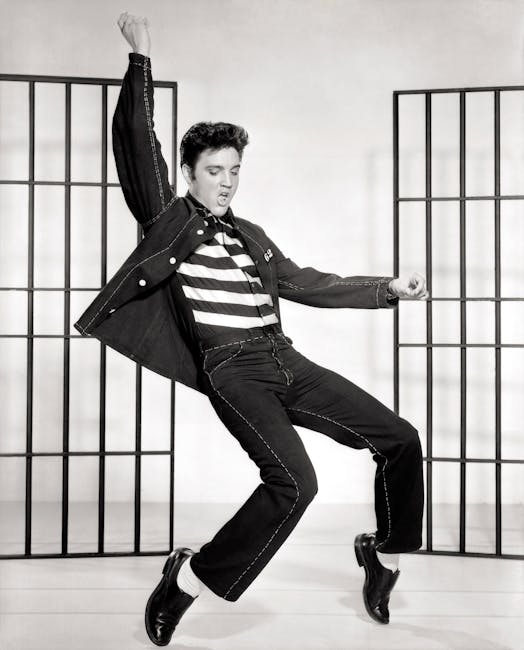
Elvis Presley Dancing

What now?

Now’s the time to refine. You’ve thought about your assumptions and how to challenge them, and push them to one side. You know what your dream outcome is, and have thought about the steps in detail to make that happen. You’ve got out of your own head and thought about how a load of different people might approach the problem.

Now you refine those. You’ve gone to the edges of possibility, and now you can bring yourself back into the safe area.

List out your options. Hopefully you have more interesting options than when you started. And more effective, more efficient options. And more expensive, more elaborate options. You have the power to decide which ones are right for you, right for now, right for this situation. 

Problem solving resources

As you go out into the world and solve different problems, there are many ways to approach these, not just lateral thinking. There are some great resources to help you on your journey. Here are a few:

How did you find that?

Everything we know is right until its proved wrong. Science a whole profession of certainties that are ripe to be disproved. But that doesn’t invalidate the work they do, not one bit.

There’s no right answer in here. That’s not true, actually. There are often many, many right answers. And some might be more right than others. And some will be down right wrong. But you’ll have a load of options to try that you didn’t have when you started.

And the further towards the edge of reason you can push your thinking throughout the process, the more interesting your answers will be. Challenge your thinking at every step. If you discount an option, ask yourself why. Leave it on the table for that little bit longer.

I’d be really interested to hear how you use lateral thinking in your work, or if this post has helped clarify lateral thinking for you.

Be brave. Feel stupid.

Feel stupid, feed your conscious, grow empathy

David Ogilvy is a name that is synonymous with advertising, but someone that I know relatively little about. Hello Wikipedia!

Businessman; founder of Ogilvy & Mather; Father of Advertising. Screen Shot 2018-11-10 at 15.51.45

Tell me something I didn’t know.

Failed scholar; apprentice chef; wildly successful Aga salesmen.

Huh? Ok, so that’s interesting. So successful a salesman was he that in 1935 Aga asked him to write a manual on selling Agas for others to follow: The Theory and Practice of Selling the AGA Cooker. It became the gold standard for selling, and not just Agas. In 1971, Fortune called it “probably the best sales manual ever written.”

Ogilvy’s lovely way with words convey such meaning, and so much of it still resonates today:

If you find yourself one fine day saying the same things to a bishop and a trapezist, you are done for.

I hope some day, I have the great fortune to speak to a Bishop and a trapezist in the same day. What an occasion that would be! Some of his words perhaps resonate less so today (and I will if I want to!):

Do not wear a bowler hat.

He also said this:

david ogilvy

Expand your horizons, grow empathy

When I was 16, I didn’t take A levels, as was the norm at the time and place. I decided not to specialise down to the three or four subjects allowed at that level, but to take the International Baccalaureate instead. This choice meant that I could continue to study a broader range of academic studies; you had to take English and maths, as well as a language, a humanity subject, a science and an additional subject.

But the advantages of taking this course were so much more than that. It wasn’t just that you could continue to pursue a range of subjects. You also had to take a course called Theory of Knowledge, essentially a philosophy course. Students are also required to do extra curricular activities: something active, something creative and something service oriented – volunteering etc.

Furthermore, every subject had to have a cultural element, to expose students to a wider world. In English we studied texted from across the globe, both written in English and translated. In art, we were encouraged to look for inspiration from far flung places. In chemistry we learnt how different parts of the world contributed to our current understanding of the subject.

The point is, we were encouraged to look outside of ourselves, so much more than the regular academic courses. Our horizons were expanded. We were encouraged to look up from our own little lives, from our screens, and see what’s out there. And develop an empathy and understanding for the wider world.

Travel makes you feel stupid

Mark Pollard talks about how travel makes you feel stupid (Sweathead ep 07 11 2018). It challenges our assumptions. It reframes how you see your own life. Things you take for granted as being the norm, or just a natural fact of life turn out not to be the norm. Marks says travel helps you build empathy.

I love this.

You know the feeling. You’re on holiday. You’re in a different country. You’ve done your research, you know the culture, you’ve picked up some of the language. You know where you’re going, where to stay, where to eat, what to eat. You’ve totally got this.

And then something seemingly simple totally floors you. Like… there are no supermarkets. You have no idea where to get household essentials of your AirBnb. How you are you going to do the dishes.

Or, you head to someone’s house and they immediately ask you if you want a shower (as is the custom in much of Brazil). Or have a whole conversation about football only to realise you’re talking about entirely different sports.

You get my drift.

But this is actually a good thing. It means you’re getting out of your own head. You’re looking up out of your own life, and really seeing what’s out there. Seeing what some of the other seven billion people in the world see. You’re expanding your horizons. Yay for travel!

Feed your conscious

So what are you going to do today to “stuff your conscious”? Where are you go to places to brush up on art, culture, science, technology, maths, crafts, teaching methods? How are you going to reframe how you see the world?

Perhaps you will take a 10 day course on design thinking? Or maybe you’ll download the Curiosity app and get five new interesting things every day. Maybe you’ll check out some of the latest thinking from philosophy, culture and science published in digital magazine Aeon. Or maybe even learn something in five minutes.

Here’s what I’ve been reading this week:

  • How time is changing. I’m reasonably well read on quantum theory, and I’ve come across chaos theory, but this is a whole other kettle of fish. I can’t summarise this article, so you’re going to have to do it for yourself.
  • How weight is changing. When is a kilo not a kilo? Since the standardisation of measures, a hunk of metal outside of Paris has been our constant. But next year, that will change. We’re going to start using the Planck constant as the basis for our measures. A weight for all people, for all times.
  • AI is learning to dress itself. In way bigger news than China’s AI news anchor, AI cartoon characters are using machine learning to dress themselves, with inevitable hilarity.
  • The Edgist subculture. They sound like space hipsters.

And finally:

If you have any charm, ooze it.

David Ogilvy, The Theory & Practice of Selling the Aga Cooker


Be brave. Feel stupid.

Strategy for beginners

Hello world!

I’m putting it out there. I wannabe a strategist. And inspired by Alex Morris and his absolutely incredible strategy scrapbook (read it now, read it later, read it again next week, flip it to a random page and use it like tarot cards).

As a life long PR darling moving into a more generalised marketing role, I miss stretching my strategic grey matter. So I’ve started collecting little snippets that catch my eye. Graphics, quotes, strategies, ways to solve problems, ways to frame problems, human foibles that amuse me.

And I’ll collect them all here. Just for you. Enjoy!

Go to people and places

As a starter for 10, here are some places to go if you’re on the hunt for the latest thoughts from the industry’s greatest thinkers:

  1. Mark Pollard’s Twitter (and podcast, and pretty much everything he does)
  2. Tom Goodwin’s Twitter
  3. The Long and the Short of it Podcast
  4. Matt Muir’s Web Curios
  5. Faris Yakob’ Twitter
  6. Austin Kleon’s blog
  7. Malcolm Gladwell’s Revisionist History
  8. APG podcast

Where do you go to have your mind stretched?

Be brave. Feel stupid.

Strategy for beginners